

Creative Thinking vs Creative Execution
Brand

Creative thinking and creative execution often get lumped together. They’re related, but they’re not the same and confusing the two is where a lot of projects fall apart.
At Creative62, we see them as two very different (but equally important) parts of the creative process.
Creative Thinking Is About the Idea
Creative thinking happens before anything is made.
It’s the messy part. The questioning. The conversations that challenge assumptions and uncover better ways of doing things. This is where we figure out:
- What’s the real problem we’re solving?
- What’s the smartest idea behind this?
- How can this brand stand out in a meaningful way?
Creative thinking sets the direction. Without it, you might execute beautifully, just in the wrong direction.
Creative Execution Is About Bringing It to Life
Creative execution is where ideas become real.
This is the craft: design, copy, motion, build, and detail. It’s about how something looks, feels, and works in the real world. Strong execution makes ideas clear, engaging, and usable.
But execution can only be as good as the thinking behind it.
Where Things Go Wrong
Most problems don’t come from poor execution. They come from weak or rushed thinking.
When teams skip the thinking phase, execution is forced to carry the weight. That’s when work looks polished but feels empty or when endless tweaks try to fix an idea that wasn’t right to begin with.
How We Approach It at Creative62
We separate thinking from making, on purpose.
First, we slow down and think. We explore ideas, test logic, and get aligned. Then we move into execution with confidence, knowing exactly what we’re bringing to life and why.
That’s when the work clicks.
The Takeaway
Creative thinking gives work meaning. Creative execution gives it form.
You need both but in the right order.
At Creative62, we believe great work doesn’t start with execution. It starts with thinking.


Trends We’re Watching in 2026
Brand
Trends come and go. Some are just visual noise, others signal real shifts in how brands think, act, and connect with people.
As we head into 2026, we’re paying less attention to what looks new and more attention to what’s actually changing behaviour. Here are a few trends we’re watching closely.
1. Less Noise, More Meaning
Brands are pulling back.
After years of loud visuals, bold-for-the-sake-of-bold identities, and constant content, we’re seeing a move towards clarity and restraint. Simpler systems, fewer messages, stronger ideas.
Not minimal for style points, minimal because it works.
2. AI as a Creative Partner (Not a Shortcut)
AI isn’t replacing creativity, but it is reshaping the process.
Used well, it speeds things up, unlocks exploration, and helps teams think broader. Used poorly, it flattens ideas and creates sameness.
In 2026, the difference won’t be who uses AI, it’ll be who uses it with taste, judgement, and intent.
3. Brands Acting More Like Products
People now expect brands to behave like well-designed products: intuitive, useful, and constantly improving.
That means fewer “campaign-only” moments and more focus on the full experience, from first touchpoint to long-term use. Strategy, UX, and brand are no longer separate conversations.
They’re the same one.
4. Personality Over Perfection
Perfect design is starting to feel cold.
We’re seeing more brands embrace warmth, imperfection, and personality. Not in a messy way, but in a human one. Design that feels considered, not manufactured. Confident, not overworked.
People connect with brands that feel real.
5. Digital Experiences With Depth
Fast, functional digital experiences are the baseline now. What’s next is depth.
More thoughtful interactions. Subtle motion. Clear storytelling. Experiences that reward attention instead of demanding it.
Less doing everything. More doing a few things really well.
Our Take
Trends shouldn’t drive decisions but they can reveal where things are heading.
In 2026, the strongest brands won’t be chasing what’s new. They’ll be doubling down on clarity, usefulness, and ideas that last.

How to Design a Social Media Calendar That Aligns With Your Brand and Goals
Brand
Social media can feel overwhelming; multiple platforms, endless content types, and constant updates. Without a plan, it’s easy to fall into the trap of posting inconsistently or creating content that doesn’t actually move your business forward.
That’s where a social media calendar comes in. It’s not just about being organised; it’s about ensuring every post aligns with your brand identity and your business objectives.
Here’s how to create one that works.
Step 1: Define Your Goals
Before you plan any content, ask: What are we trying to achieve?
- Growing brand awareness?
- Driving website traffic?
- Generating leads?
- Building community and engagement?
Your goals will shape not only what you post but where you post. For example, driving leads may require LinkedIn thought leadership, while building community might focus on Instagram or TikTok storytelling.
Step 2: Anchor in Your Brand Identity
Your social media isn’t separate from your brand, it’s an extension of it. Make sure every post reflects:
- Tone of voice: playful, professional, bold, or conversational.
- Visual identity: consistent use of colours, fonts, imagery.
- Values: highlight what matters most to your brand and audience.
This consistency builds recognition and trust over time.
Step 3: Map Out Content Pillars
Think of content pillars as the themes that support your brand narrative. For example:
- Educational: tips, industry insights, how-tos.
- Behind-the-scenes: your process, team, culture.
- Promotional: products, services, launches.
- Engagement-driven: polls, Q&As, user-generated content.
Mixing these ensures balance, your feed isn’t just self-promotion but delivers real value.
Step 4: Choose the Right Tools
A social media calendar doesn’t have to be fancy. Options include:
- Spreadsheets: Simple, cost-effective.
- Project management tools: For collaboration.
- Specialised platforms: For scheduling + analytics.
Pick the tool that matches your workflow and team size.
Step 5: Plan Cadence & Frequency
Your posting schedule should match both platform best practices and your resources. Consistency matters more than volume, posting 3 times a week consistently beats posting daily for a month and then going silent.
Step 6: Track, Measure, and Refine
Your calendar isn’t set in stone. Monitor what works and what doesn’t:
- Which posts drive the most engagement?
- Which platforms convert the best?
- What times does your audience respond most?
Use these insights to adjust your calendar and stay aligned with your goals.
Final Thoughts
A well-designed social media calendar is more than a scheduling tool, it’s a strategic framework that keeps your brand consistent, your goals in focus, and your content purposeful.
At Creative62, we help brands design not just posts, but social strategies that make an impact where it matters most.
Storytelling Techniques Brands Can Use to Stand Out
Brand
In a crowded digital landscape, facts and features aren’t enough to capture attention. What truly makes people connect with a brand is storytelling. A good story gives your brand a voice, a personality, and a sense of purpose.
Here are some powerful storytelling techniques brands can use to cut through the noise and stand out.
1. Start With Your “Why”
Simon Sinek said it best: people don’t buy what you do, they buy why you do it. Your origin story, mission, and vision give people a reason to care.
- Share how your brand began.
- Highlight the problem you set out to solve.
- Connect your purpose to your audience’s values.
This creates authenticity and emotional resonance.
2. Use Relatable Characters
Every story needs a hero and in brand storytelling, that hero should be your customer, not your company.
Frame your brand as the guide who helps them overcome challenges. For example:
- Instead of “Our software is the fastest,” try “Here’s how businesses like yours save 10 hours a week with our platform.”
Your audience should see themselves reflected in your stories.
3. Create Conflict and Resolution
Conflict makes stories compelling. In branding, that conflict is often a pain point your audience faces. Show the struggle, then demonstrate how your brand provides the resolution.
Example:
- Conflict: “Managing multiple social accounts feels chaotic.”
- Resolution: “Our tool simplifies it into one seamless dashboard.”
This narrative structure keeps people engaged while positioning your brand as the solution.
4. Harness the Power of Emotion
Emotions drive decisions more than logic. Use storytelling to evoke feelings that align with your brand identity. Whether it’s joy, inspiration, security, or empowerment.
Ways to add emotion:
- Visual storytelling through imagery or video.
- Customer testimonials framed as human stories.
- Messaging that taps into aspirations or fears.
5. Keep It Simple and Consistent
The best stories are clear and repeatable. Don’t overcomplicate your narrative, boil it down to a few key messages that can be echoed across channels.
Consistency reinforces recognition. Whether it’s a social post, an ad, or your website copy, your brand story should feel seamless.
6. Leverage Different Formats
Storytelling doesn’t have to mean long blog posts. Experiment with formats that suit your audience:
- Short-form video (TikTok, Reels, YouTube Shorts)
- Interactive experiences (quizzes, AR filters)
- Case studies and testimonials
- Infographics or carousels
Each format is a chance to tell the same core story in a fresh, engaging way.
Final Thoughts
Storytelling is what transforms a brand from a logo into a living, breathing entity. By focusing on your “why,” spotlighting your customers, and weaving in emotion, you create stories that resonate long after the scroll.
At Creative62, we help brands uncover and craft stories that don’t just get noticed but remembered.

AI & Branding: Hype, Help, or Headache?
Brand
AI is everywhere! From chatbots to content generators but what does it really mean for branding? Is it a revolutionary tool or just another tech fad?
The Hype
There’s no denying AI is transforming industries. From image generation to predictive analytics, AI tools can:
- Speed up concept development
- Generate content at scale
- Personalise user experiences
- Offer design variations in seconds
Sounds magical, right? But there’s more to the story.
The Help
Used well, AI can be a powerful sidekick:
- Brand strategy: Analyse customer data and sentiment to refine positioning.
- Visual content: Quick prototype logo or campaign ideas.
- Tone of voice: Generate first-draft copy aligned with your brand persona.
- Accessibility: Automate alt text, transcripts, and UX audits.
At Creative62, we’ve experimented with AI to accelerate, not replace, creative thinking. Think of it as a sketchpad, not the final canvas.
The Headache
AI isn’t without its challenges:
Originality risk: AI pulls from existing data. Your brand could start to look or sound like everyone else’s.
- Lack of context: AI doesn’t “understand” your audience or culture like humans do.
- Ethical issues: Plagiarism, bias, and ownership are still murky areas.
- Brand dilution: Over-reliance on AI can erode authenticity and emotional connection.
Our POV
AI can be a brilliant tool, if you stay in control. It’s great for jump-starting ideas, but your brand still needs human insight, taste, and strategy to truly resonate.
So… AI in branding? ❌ Don’t expect it to replace originality ✅ Leverage it to support, not define, your brand
Machines can assist. But creativity? That’s still a human superpower.
Let’s build something that algorithms wish they could dream up.
Tell us about your project.
Brand Therapy: What Would Your Brand Say in a Therapy Session?
Brand
Imagine this: Your brand walks into a therapist’s office. It slumps onto the couch, sighs, and says…
“I don’t know who I am anymore. People don’t recognise me. My tone’s all over the place. And honestly? I feel invisible.”
Sound familiar?
Just like people, brands have identities, histories, and baggage. And sometimes they need help navigating change, finding confidence, or reconnecting with their audience.
Signs Your Brand Might Need Therapy
- Identity crisis: You’ve outgrown your original logo or messaging, but haven’t updated anything.
- Inconsistency: You look different on social, print, and your website.
- Comparison anxiety: You’re constantly chasing competitors rather than leading your own path.
- Lost voice: Your brand doesn’t sound like you anymore or worse, no one’s listening.
The Brand Therapy Process (Yes, We Do This)
At Creative62, we help brands:
- Revisit their core values and purpose
- Audit all touch points to spot inconsistency
- Build a cohesive voice and identity
- Align internal culture with external presence
It’s not about starting over. It’s about getting your brand back in touch with what makes it special.
Thought Experiment: Ask Your Brand
- “What’s my purpose?”
- “When was the last time I felt proud of my branding?”
- “Am I attracting the right people or just anyone?”
- “What do I need to let go of?”
Therapy Doesn’t Mean You’re Broken
It means you’re self-aware. Proactive. Ready to grow.
Want to explore your brand’s psyche? Let’s talk.
Collaboration Between Agencies and In-House Design Teams: Unlocking Better Results
Brand

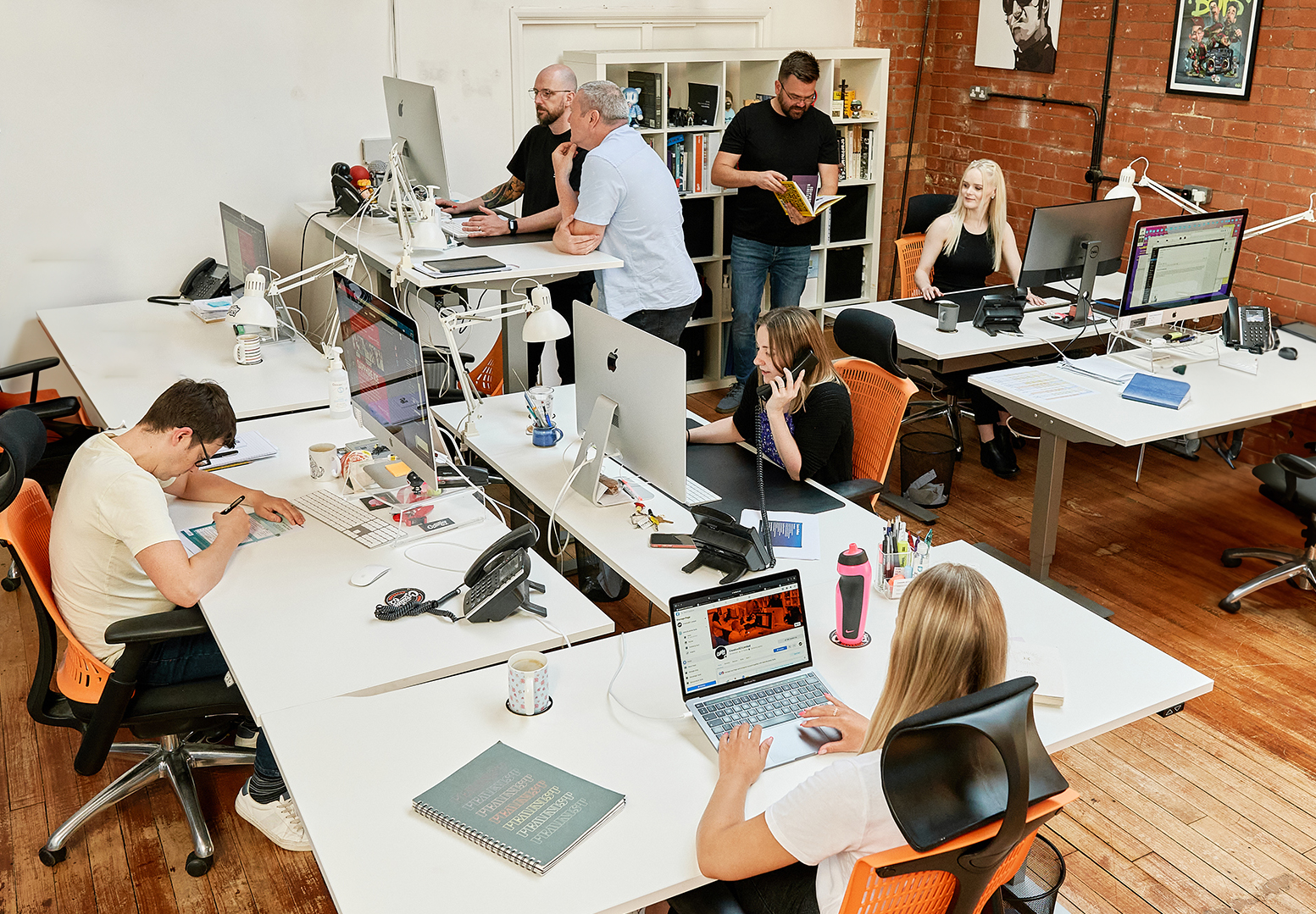
Brands with in-house design teams often face a dilemma: Should they rely solely on internal resources or bring in external expertise? At Creative62, a multi-award-winning creative design agency, we believe the answer lies in collaboration. By working together, agencies and in-house teams can unlock creativity, improve efficiency, and achieve strategic goals that neither could accomplish alone.
Collaboration between these two entities is a game-changer for several reasons. First, in-house teams deeply understand their brand, but sometimes, being too close to the work can limit creativity. Agencies like Creative62 bring an outsider’s perspective, offering innovative ideas and solutions inspired by broader industry experience. This fresh lens can reinvigorate campaigns and uncover new growth opportunities.
Moreover, your in-house team might excel at day-to-day design needs, but complex projects like rebranding, advanced UX/UI design, or multi-channel campaigns often require niche expertise. Partnering with a multi-award-winning creative design agency like Creative62 gives you access to specialised skills without the need for permanent hires. This approach not only saves resources but also ensures high-quality results.
When deadlines loom or workloads spike, even the best in-house teams can feel stretched thin. Agencies act as an extension of your team, providing extra hands when you need them most—ensuring high-quality results without burnout. Creative62 has a proven track record of supporting businesses during these critical periods, helping them meet deadlines without compromising on quality.
Collaboration doesn’t mean duplication—it means synergy. Agencies like Creative62 work closely with in-house teams to streamline workflows, align strategies, and execute projects faster while maintaining brand consistency. This seamless integration ensures that both teams work towards a unified goal, leveraging each other’s strengths to deliver impactful results.
Furthermore, collaboration fosters growth on both sides. In-house teams gain insights into new tools, trends, and techniques, while agencies benefit from the client’s deep brand knowledge. It’s a win-win for everyone involved. At Creative62, we’re committed to mutual learning and growth, ensuring that our partnerships are beneficial and enriching for both parties.
At Creative62, a multi-award-winning creative design agency, we’ve partnered with numerous in-house teams to deliver impactful results through collaboration. Whether it’s tackling a major campaign or providing fresh creative input, we’re here to help your team shine even brighter. Our collaborative approach ensures that your brand receives the best possible creative solutions tailored to drive real results.
Would you be ready to explore how we can work together? Let’s chat!


Why Branding & Design Are the Key to Scaling Your Business Successfully
Brand
Scaling a business is a challenging yet exciting journey. As your business grows, your brand’s presence, design, and marketing strategies must evolve to ensure long-term success. But how can you manage the complexities of scaling your business while maintaining a consistent brand experience? The answer lies in working with a creative agency that specialises in branding and design.
In this blog, we’ll discuss why collaborating with a creative agency is crucial for scaling your business and how a strategic approach to branding and design can fuel your growth.
1. Brand Consistency Across All Channels
As your business expands, maintaining a consistent brand experience across all platforms—whether it’s your website, social media, email campaigns, or physical materials—is essential. Brand consistency reinforces your company’s identity, builds trust with customers, and ensures your messaging remains clear and cohesive, helping you stand out in a crowded marketplace. It strengthens recognition, fosters loyalty, and creates a strong emotional connection with your audience.
A full-service creative agency like Creative62 can provide strategic brand identity design, logo creation, print and digital design, and social media branding. With our expertise, we ensure your brand remains unified and impactful as it scales, adapting seamlessly to new opportunities and growth.
2. Effective Brand Strategy for Market Expansion
Expanding into new markets requires a strong brand strategy to connect with new audiences and stand out from competitors. A clear strategy helps you understand customer needs, drive sustainable growth, and build loyalty.
At Creative62, we specialise in brand positioning and market research, crafting tailored strategies that guide your brand’s successful expansion.
3. Creating Scalable Design Systems
As your business grows, so do the demands on your design assets. A scalable design system keeps your brand consistent, adaptable, and easy to manage across platforms.
A well-structured system saves time and money, ensuring high-quality visuals across campaigns and products. Creative62 develops flexible design systems with templates, guidelines, and custom elements, keeping your brand cohesive while allowing for innovation.
4. Digital Marketing Expertise for Brand Visibility
Scaling your business requires strong digital visibility. From SEO-friendly websites to targeted social media campaigns, a well-integrated digital marketing strategy ensures you reach the right audience and drive engagement.
Effective digital marketing boosts brand awareness, attracts new customers, and turns website visitors into clients. As you grow, a strategic approach keeps your audience engaged.
Creative62 offers a full suite of digital marketing services, including SEO, social media marketing, paid ads, email marketing, and content creation—helping your brand stay visible and thrive online.
5. Web Design That Supports Business Growth
Your website is often the first impression of your brand. As your business grows, it must handle higher traffic, provide a seamless user experience, and reflect your evolving brand identity.
A well-designed website enhances UX, drives conversions, and keeps customers engaged. To scale successfully, your site must adapt to new demands.
Creative62 designs and develops SEO-optimised, mobile-responsive websites with e-commerce and content management capabilities—ensuring your online presence grows with your business.
6. Creative Advertising and Campaigns for Increased Reach
Effective advertising is key to scaling your business. Whether through social media ads, email marketing, or video campaigns, creative and targeted ads help build brand awareness, generate leads, and drive conversions.
As your business grows, your advertising must be scalable, cost-effective, and adaptable across channels.
Creative62 designs impactful ad campaigns across digital and print, enhancing your social media presence, email outreach, and video marketing—ensuring your brand reaches the right audience with the right message.

Our Commitment to Sustainability: The Creative62 Zero Carbon Journey
Brand
At Creative62, sustainability isn’t just a buzzword—it’s a responsibility. We know businesses have a big role to play in shaping a greener future, and we’re all in. From reducing our carbon footprint to making eco-friendly choices in every corner of our business, we’re serious about doing our bit for the planet.
Powering a Sustainable Future
Here’s how we’re taking action:
100% Renewable Energy – Our office is powered by clean, renewable energy, keeping our footprint light and our impact positive.
Energy-Efficient Offices – With smart plug technology, LED lighting, and energy-conscious practices, we’re making sure our space runs as efficiently as possible.
Eco-Friendly Servers – Our digital infrastructure is backed by green server technology, meaning our work stays cutting-edge without cutting into the planet’s resources.
Less Travel, More Virtual – We’re embracing remote collaboration and virtual meetings to cut down on unnecessary travel emissions.
Sustainable Printing Solutions – FSC-certified print solutions ensure we’re making responsible paper choices that reduce waste.
Digital-First Approach – Encouraging clients to go paperless and opt for digital alternatives like PDFs—it’s better for business and better for the environment.
Sustainability isn’t a box we tick—it’s embedded in how we work, and we’re always looking for ways to do better.
What’s Next?
We’re constantly evolving, exploring new ways to operate even more sustainably. Whether it’s adopting emerging green technologies or finding innovative ways to reduce waste, we’re on it.