

The Biggest Branding Mistakes We See
Brand

When people hear the word “branding“, they usually think about logos, colours and fonts. Maybe a set of brand guidelines if they’re feeling particularly adventurous.
And while those things matter, they’re rarely where the biggest problems are.
In fact, some of the strongest brands in the world don’t have the fanciest logos or the most complex visual identities.
What they do have is clarity. People know who they are. What they stand for. And why they matter.
After nearly twenty years of working with businesses of all shapes and sizes, we’ve noticed that the biggest branding mistakes tend to have very little to do with design.
Here are a few we see time and time again.
Trying To Speak To Everyone
This is probably the biggest one. Many businesses are so worried about excluding potential customers that they end up saying very little to anyone. Their messaging becomes broad, safe and generic. They want to appeal to everybody.
The problem is that when you try to talk to everyone, you usually end up connecting with nobody.
The strongest brands understand exactly who they’re for. Just as importantly, they understand who they’re not for. That confidence makes a huge difference.
Focusing On What You Do Instead Of Why It Matters
Most businesses can explain what they do. Far fewer can explain why somebody should care, a customer isn’t usually interested in the process.
They’re interested in the outcome. They want to know how you’ll solve their problem, save them time, make them money or make their life easier.
One of the most valuable exercises any business can do is stop talking about themselves for five minutes and start thinking about things from the customer’s perspective.
Treating Branding As A One-Off Project
Branding isn’t something you tick off a list and never think about again. Businesses evolve, markets change, customer expectations shift. A brand should evolve too. That doesn’t mean a rebrand every few years.
It simply means regularly reviewing whether your brand still reflects who you are today, not who you were five years ago.
Being Inconsistent
This isn’t just about using the wrong logo. It’s much bigger than that. It’s when your website says one thing, your social media says another and your sales team says something completely different.
It’s when customers have a different experience depending on who they speak to. Consistency builds trust. Inconsistency creates doubt and doubt is surprisingly expensive.
Looking Like Everyone Else
It’s never been easier to look professional. Templates are everywhere, AI can generate ideas in seconds, good design is more accessible than ever. That’s brilliant in many ways.
The challenge is that it’s also making businesses look increasingly similar. We see countless brands using the same language, the same visuals and the same ideas.
Being professional is good. Forgettable isn’t.
The brands that stand out are usually the ones willing to show a bit of personality.
Thinking Branding Is Just A Marketing Job
One of the biggest misconceptions we see is that branding sits entirely with the marketing team.
It doesn’t. Your brand is shaped by every interaction someone has with your business.
The way your team answers the phone. The experience customers receive. The promises you keep. The way problems are handled. The way people talk about you when you’re not in the room. That’s branding too. In many ways, it’s the most important part.
Waiting Until There’s A Problem
A lot of businesses only think seriously about branding when something feels broken.
Sales slow down, the competition starts pulling ahead, the website looks dated or the messaging no longer fits.
By that point, the challenge is often bigger than it needed to be. The strongest brands don’t wait for problems to appear. They continually review, refine and improve. Not because they’re chasing perfection because they’re staying relevant.
Get those things right and everything else becomes much easier. Get them wrong and even the most beautiful branding in the world will struggle to make an impact.


Why Results Matter More Than Deliverables
Brand
Imagine hiring a personal trainer. A few months later they proudly tell you: “We’ve completed 47 workouts together.” Technically, that’s true. But it’s not really what you care about. You care about whether you’re fitter, stronger, healthier. Whether you’ve achieved the reason you hired them in the first place.
Marketing isn’t much different. Yet it’s surprisingly common for businesses to focus on what was delivered rather than what was achieved. For example, the new website launched, the brochure was printed, the campaign went live, the social media content was posted, the exhibition stand looked great.
All good things but none of them are the goal. They’re just the work. The goal is what happens next.
Did more people visit the website? Did enquiries increase? Did customers better understand what the business does? Did sales improve? Did people remember the campaign? Did the perception of the business change?
Those are the questions that really matter. The challenge is that deliverables are easy to measure. Results are harder.
You can count the number of social media posts that went out this month. It’s much harder to measure whether those posts actually moved the business forward.
You can launch a beautiful new website. But if nobody visits it, or it doesn’t help customers take the next step, what have you really achieved?
We’ve all seen projects that looked fantastic but didn’t make much difference. We’ve also seen projects that weren’t particularly glamorous but delivered incredible results.
Given the choice, we’d take the second option every time.
That’s why one of the first questions we ask on any project is:
“What does success look like?” It sounds simple, but you’d be surprised how often nobody has properly defined it.
Sometimes success is more sales. Sometimes it’s attracting a different type of customer. Sometimes it’s increasing membership numbers, event attendance or brand awareness.
The answer changes from project to project. The important thing is having an answer. Because if success hasn’t been defined, it’s almost impossible to know whether a project worked.
It’s a bit like setting off on a journey without deciding where you’re going. You might end up somewhere brilliant but you might not. Either way, it’s difficult to call it a success.
This is also why we believe every project deserves a conversation after it has launched. What happened? What worked? What didn’t? What would we do differently next time?
The creative industry has a habit of moving straight onto the next thing. The next campaign. The next website. The next deadline. But some of the most valuable lessons come after the work has gone live.
That’s where the real evidence is because clients don’t invest in marketing to receive deliverables. They invest in marketing because they want something to change.
And when something genuinely changes for the better, nobody remembers how many pages the brochure had or how many rounds of amends the website went through. They remember the result.

Why Businesses Outgrow Their Brand
Brand
When people think about rebranding, they often think about logos, new colours, a new website. And while those things are usually part of the process, they’re rarely the reason a rebrand becomes necessary in the first place.
More often than not, businesses outgrow their brand because they’ve outgrown the version of themselves it was built for.
A business usually starts with a clear focus, a handful of services or products, maybe a small team. The brand reflects that moment in time perfectly.
Then the business grows, gets new services or enters new sectors. The team expands and the quality of work improves. Then with that the ambition gets bigger.
Before long, the business has changed significantly but the brand hasn’t.
Suddenly there’s a gap between who the business is and how it’s being perceived and that’s usually where the problems begin.
Growth Creates New Expectations
As businesses grow, expectations change. The clients you wanted five years ago might not be the clients you want today. The projects you were excited about at the beginning may no longer align with your ambitions.
The market starts viewing you differently or at least, it should.
The challenge is that perception doesn’t always keep up with reality.
A business can be delivering incredible work and still be viewed through the lens of where it started and that’s frustrating but also surprisingly common.
Success Can Create Its Own Branding Challenges
This is something that often catches businesses off guard. Growth creates opportunities but it can also create complexity because before long, the brand starts feeling inconsistent.
Not because anyone has done anything wrong.Simply because the business has evolved faster than the brand has. What worked when there were five people in the company might not work when there are twenty. What resonated with customers five years ago may not resonate today. Success changes the conversation. The brand needs to change with it.
A Simple Question
It’s worth saying that not every business needs a rebrand. So, think of it like this; If someone discovered your business for the first time tomorrow, what would they learn from your brand?
Would they understand what makes you different?
Would they understand the quality of work you produce?
Would they understand where you’re heading?
Or would they see a version of your business that no longer exists?
It’s a simple question but it’s often where the most valuable conversations start because the strongest brands aren’t necessarily the newest. They’re the ones that grow alongside the businesses behind them.

Not Everything Needs To Go Viral
Brand
Spend five minutes on LinkedIn and you’ll probably see someone celebrating a post that generated 500,000 views. Open TikTok and you’ll find people explaining how they grew an account from zero to a million followers. Scroll through marketing news and you’ll be told about the latest campaign that “broke the internet.”
It’s easy to see why businesses become obsessed with going viral. Big numbers are exciting, they look impressive in presentations. They generate attention and let’s be honest, we all enjoy seeing something we worked on take off.
But here’s the thing. For most businesses, going viral isn’t the goal. In fact, it might not even be particularly helpful.
Imagine you run a specialist engineering company in the Midlands. Your ideal client is a manufacturing director responsible for multi-million-pound investment decisions.
What would be more valuable?
A video that gets two million views from people all over the world who will never buy from you? Or a piece of content seen by twenty people, five of whom are exactly the type of decision-makers you’re trying to reach?
The answer is obvious. Yet businesses often find themselves chasing attention rather than relevance.
We see it all the time, marketing plans become focused on impressions, views, followers and likes. The numbers grow, but the business doesn’t. That’s because attention and impact aren’t the same thing.
A post can generate thousands of likes and contribute absolutely nothing to business growth. At the same time, a piece of content seen by a relatively small audience can generate enquiries, sales and opportunities that genuinely move a business forward.
The challenge is that the second scenario isn’t nearly as exciting to talk about. Nobody rushes to share a screenshot of a post that reached 237 people but if one of those people becomes a client, suddenly the numbers look very different.
That’s why we believe businesses should be careful about the metrics they’re celebrating. Views, reach, engagements are all useful but they’re all secondary.
The real question is:
- What happened because of them?
- Did somebody make an enquiry?
- Did someone join your event?
- Did a potential client get in touch?
- Did people gain a better understanding of what you do?
- Did it create a conversation that otherwise wouldn’t have happened?
Those are the outcomes that matter. The irony is that some of the most successful marketing campaigns never go viral at all. They simply reach the right people with the right message at the right time.
Just consistent, effective marketing doing exactly what it was supposed to do. Of course, if something goes viral and generates business results, that’s fantastic. Nobody’s turning that down but it shouldn’t be the benchmark.
Because for every viral success story, there are thousands of businesses quietly growing by showing up consistently, communicating clearly and building trust over time.
It’s not as glamorous or shareable but it’s usually far more sustainable. The reality is that most businesses don’t need millions of people talking about them. They need the right people paying attention and those are two very different things.

Supporting the Cosby Yarn Bomb Once Again
Brand
At Creative62, some projects mean more than simply delivering great design. They become partnerships that we’re genuinely proud to be part of.
That’s exactly how we feel about the Cosby Yarn Bomb.
We’re delighted to once again support this much-loved community event, working alongside Gather Create Grow to help bring another colourful celebration of creativity to the village of Cosby.
Bringing Creativity to the Community
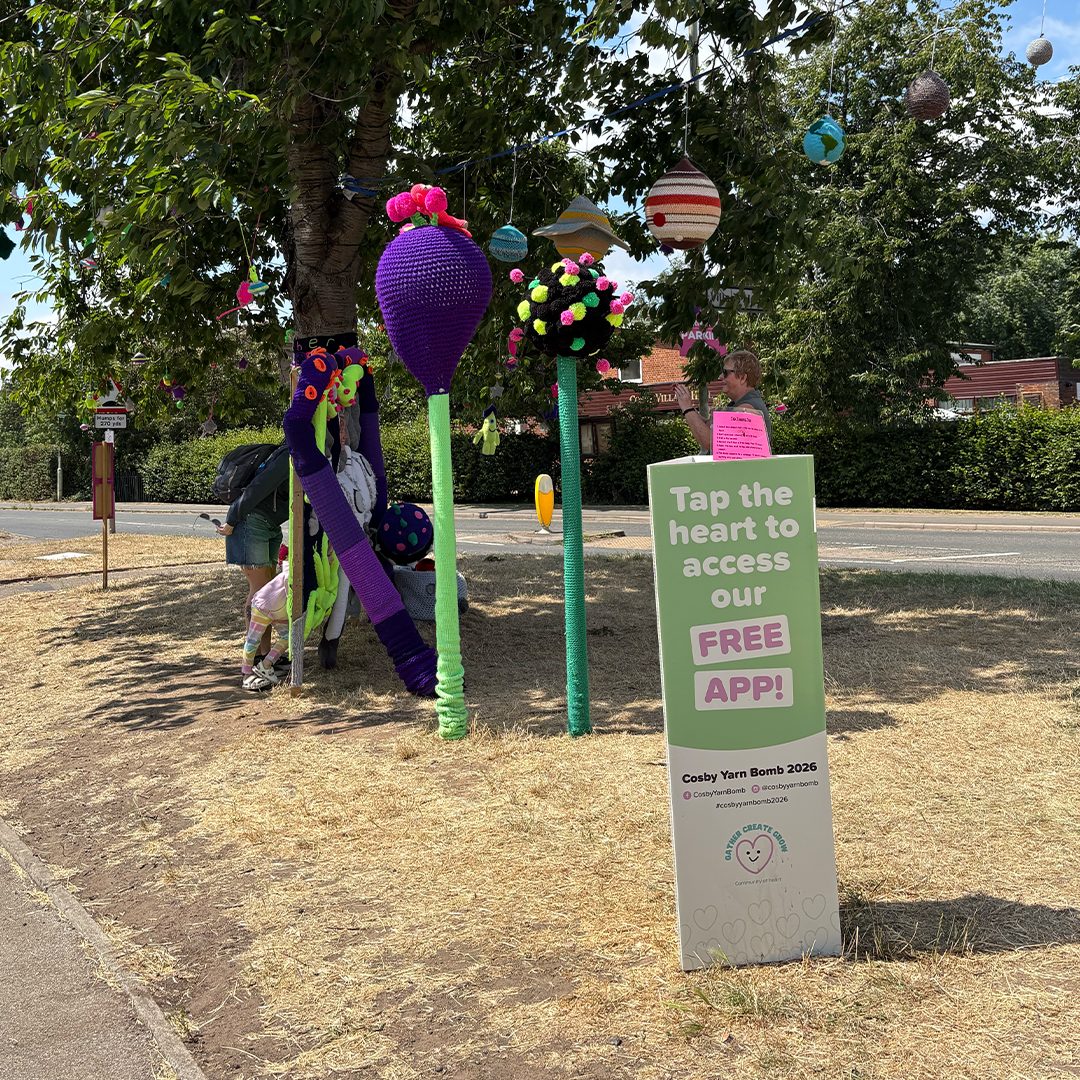
The Cosby Yarn Bomb transforms the village each year with vibrant textile installations, handmade by the community for the community. It’s a fantastic example of how creativity can bring people together, encouraging visitors to explore local streets while celebrating art, wellbeing and community spirit.
Supporting initiatives like this aligns perfectly with our own values. As a creative agency based in Leicester, we love using design to make a positive impact, whether that’s helping businesses grow or supporting projects that strengthen local communities.





Supporting This Year’s Event
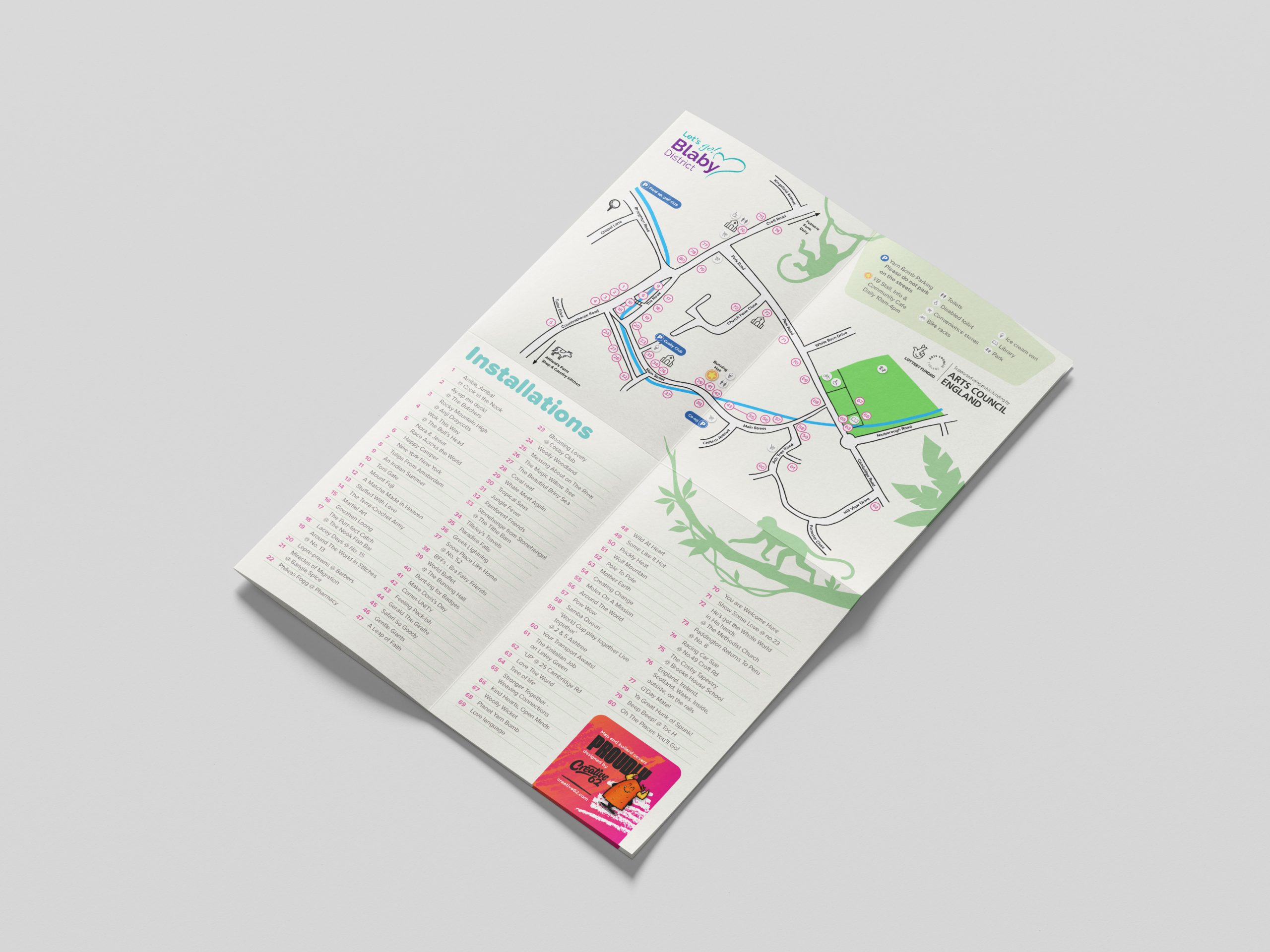
For this year’s Yarn Bomb, we were proud to deliver a range of creative design work to support the event, helping visitors navigate the trail and creating eye-catching visuals that complemented the colourful installations.
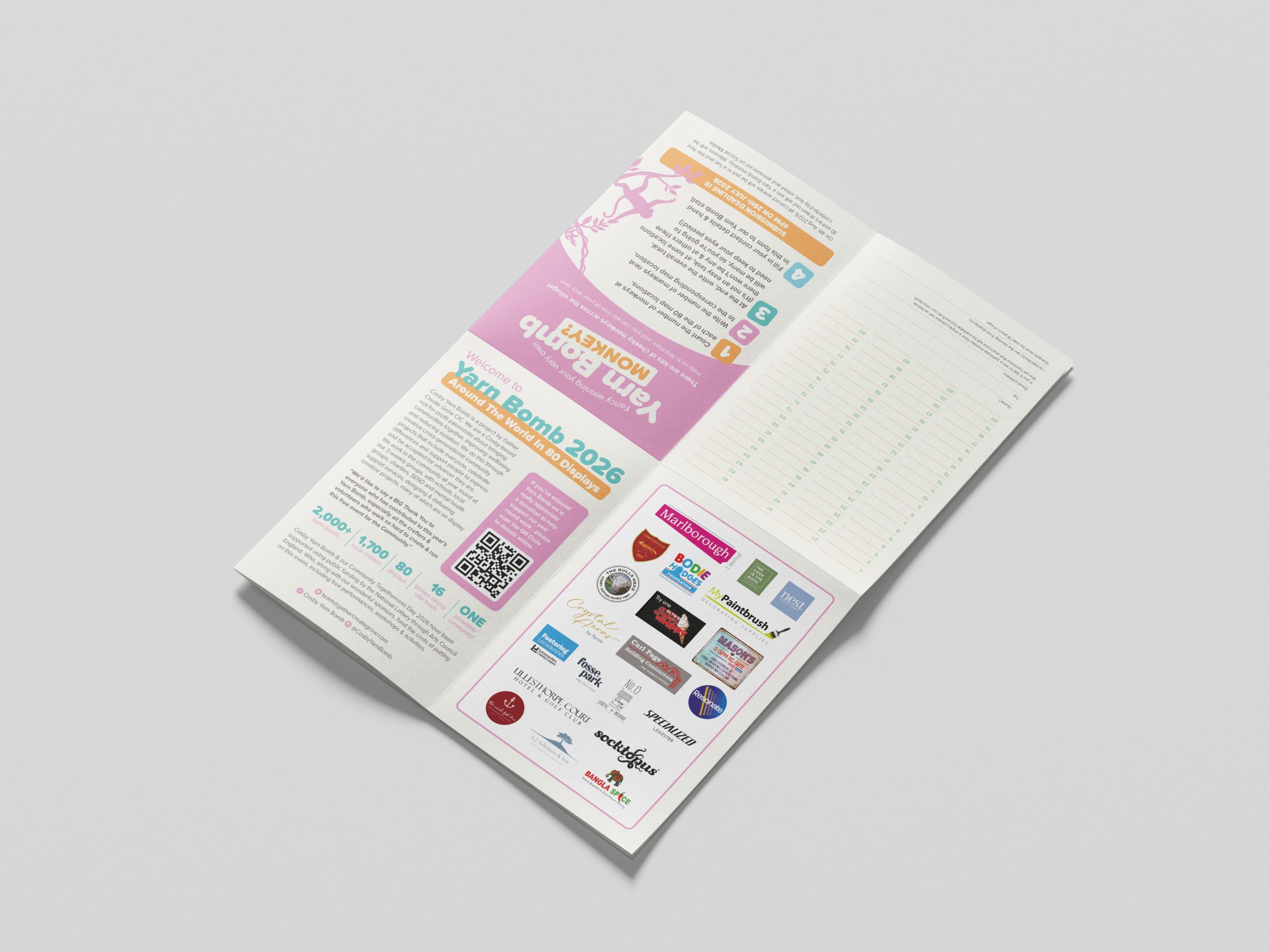
Our work included the official event maps, designed to make exploring the village as enjoyable as possible, alongside the pollard covers that have become another memorable part of this year’s display.
Every design was created with the visitor experience in mind, combining practical information with bold, engaging visuals that captured the spirit of the event.
A Partnership We’re Proud Of
One of the best parts of working on the Cosby Yarn Bomb is the relationship we’ve built with the team at Gather Create Grow over the years.
Hearing positive feedback from the people we work with is always incredibly rewarding, and we’re grateful for Mel’s kind words:
“We have found Creative62 really brilliant to work with. Nothing’s too much trouble, they’re really good communicators and their work is a really high standard. I’d definitely recommend them to other people.”
Building long-term relationships based on trust, collaboration and great communication is something we value highly, and testimonials like this remind us why we love what we do.
Looking for creative support?
Whether you’re organising a community event, launching a campaign or refreshing your brand, Creative62 combines strategy, creativity and design to help bring ideas to life.
If you’d like to chat about your next project, we’d love to hear from you.
How to Choose the Right Creative Agency in Leicester
Brand
Choosing the right creative agency can have a huge impact on your business. Whether you’re investing in branding, web design, social media, or marketing, the right agency should feel like a genuine partner that understands your goals and helps your business grow.
With so many agencies available, it’s important to know what to look for before making a decision.
Look Beyond Just the Portfolio
A strong portfolio is important, but it shouldn’t be the only thing you consider.
An agency’s work should not only look good but also feel strategic and consistent. Ask yourself:
- Does their work feel modern and professional?
- Can they adapt to different industries?
- Do their projects have strong branding and clear messaging?
- Would you trust them with your business image?
Good design should always support business goals, not just aesthetics.
Make Sure They Understand Your Business
The best creative agencies take time to understand your business, audience, and long-term goals before jumping into design work.
A good agency should ask questions about:
- Your target audience
- Your competitors
- Your brand values
- Your business objectives
- What makes your business different
Without strategy, even great-looking design can fall flat.
Check Their Services
Many businesses prefer working with agencies that offer multiple creative services under one roof.
This can include:
- Branding
- Website design
- Social media content
- Photography and video
- Marketing support
- SEO
Having everything aligned through one agency often creates a more consistent and professional brand presence.
Communication Matters
A creative agency should feel collaborative and easy to work with.
Clear communication, transparency, and regular updates are all important throughout the process. A strong working relationship often leads to better creative results and a smoother experience overall.
Look for Long-Term Value
The cheapest option isn’t always the best investment.
A strong agency should help create work that supports long-term growth, builds trust with customers, and helps your business stand out from competitors.
Investing in professional branding and design can have a major impact on how customers perceive your business.
Choose an Agency That Feels Like the Right Fit
Every agency has a different style, personality, and approach.
Some businesses prefer highly corporate agencies, while others want a more creative, collaborative, and modern feel. Choosing an agency that aligns with your business culture can make a huge difference to the overall experience.
Choosing the right creative agency in Leicester is about more than finding someone who can design a logo or build a website.

Why Leicester Businesses Are Investing More in Branding
Brand
Branding is no longer something only large national companies focus on. Across Leicester, more businesses than ever are investing in their branding to help them stand out, build trust, and compete in an increasingly digital world.
From independent businesses and start-ups to established companies, strong branding has become a key part of long-term business growth.
Competition Is Growing
Leicester has a thriving business community, with new companies launching across a wide range of industries every year. As competition increases, businesses are realising that good products or services alone are no longer enough.
Customers are constantly exposed to brands online through websites, social media, advertising, and content marketing. Businesses that present themselves professionally and consistently are far more likely to capture attention and build trust.
Strong branding helps businesses:
- Stand out from competitors
- Create a memorable identity
- Build credibility
- Attract the right audience
First Impressions Matter More Than Ever
For many customers, a website or social media page is the first interaction they have with a business.
Outdated branding, inconsistent visuals, or poor design can quickly create the wrong impression, even if the business itself offers excellent services.
Modern consumers expect businesses to look professional online. A strong visual identity helps customers feel more confident and engaged from the very first interaction.
Social Media Has Changed Customer Expectations
Social media has raised the standard for branding dramatically.
Customers now expect businesses to have:
- Cohesive visuals
- Clear messaging
- Strong photography and video
- Consistent tone of voice
- Professional websites
Businesses across Leicester are investing more into branding because they understand that appearance and presentation directly impact how customers perceive value.
Branding Helps Build Trust
Trust plays a huge role in purchasing decisions.
Businesses with clear, professional branding often appear:
- More established
- More reliable
- More credible
- More premium
Consistent branding across websites, social media, packaging, and marketing materials helps create familiarity and familiarity builds trust over time.
Local Businesses Are Thinking Bigger
Many Leicester businesses are no longer just competing locally. With online shopping, digital marketing, and social media, businesses now have the opportunity to reach customers nationally and even internationally.
As a result, businesses are investing in branding that feels modern, scalable, and professional enough to grow with them.
A strong brand can help businesses position themselves more confidently within their industry and attract larger opportunities.
Branding Is More Than Just a Logo
One of the biggest shifts in recent years is that businesses now understand branding goes far beyond visual design.
Branding now includes:
- Tone of voice
- Customer experience
- Website design
- Social media presence
- Content creation
- Messaging and values
The most successful brands create a consistent experience across every customer touchpoint.
Why Consistent Branding Matters More Than Ever
Brand
Customers interact with businesses across multiple platforms every day, from websites and social media to emails and advertisements. That’s why consistent branding has never been more important.
Strong branding is about more than just a logo. It’s about creating a recognisable identity that builds trust, improves recognition, and helps your business stand out.
What Is Brand Consistency?
Brand consistency means presenting your business in a clear and recognisable way across all platforms.
This includes:
- Your logo
- Colours and fonts
- Tone of voice
- Social media content
- Website design
- Marketing materials
When everything feels connected, customers are more likely to recognise and remember your business.
Why It Matters
It Builds Trust
People trust brands that appear professional and established. If your website looks polished but your social media feels outdated or inconsistent, it can create confusion and weaken customer confidence.
Consistent branding creates familiarity and familiarity builds trust.
It Helps Customers Remember You
Consumers see thousands of pieces of content every day. Repeating the same visual identity, messaging, and style helps strengthen brand recognition over time.
The more recognisable your business becomes, the more likely people are to think of you when they need your services.
It Improves Marketing
Consistent branding makes marketing more effective because customers instantly understand who you are.
It can help improve:
- Social media engagement
- Website conversions
- Customer loyalty
- Overall brand recognition
It also makes creating content much easier internally, as there’s a clear direction to follow.
The Importance of Authentic Branding
Modern branding isn’t just about looking polished, it’s also about feeling genuine.
Customers connect more with businesses that show personality through:
- Behind-the-scenes content
- Real customer stories
- Founder-led marketing
- Honest communication
The strongest brands combine consistency with authenticity.
In a crowded digital space, consistent branding helps businesses stand out, build trust, and stay memorable.
Whether someone discovers your business through social media, your website, or word of mouth, your branding should always feel connected and recognisable.
Because great branding isn’t just about looking good, it’s about being remembered.

When a Full Rebrand Is the Right Move
Brand
Rebrands tend to polarise opinion.
For some organisations, a rebrand feels overdue. For others, it feels risky, expensive, or unnecessary.
The reality is that a rebrand isn’t something to want or avoid, it’s something to diagnose. Done at the right moment, it can unlock growth. Done at the wrong time, it creates disruption without benefit.
This article helps clarify when a full rebrand is genuinely the right move and when it isn’t.
What a Rebrand Actually Is
A rebrand isn’t just a new identity. It’s a reset of how the organisation presents itself to the world.
That usually includes:
- Positioning and perception
- Messaging and tone
- Visual identity
- How the brand shows up across every touchpoint
Because of that, rebrands affect far more than marketing. They impact sales, recruitment, culture, and confidence.
When a Rebrand Makes Sense
A full rebrand is usually justified when one or more of the following are true:
1. The business has fundamentally changed
This could be:
- A shift in audience
- A new offer or business model
- A move into different markets
- Growth that’s outpaced the brand
If the brand no longer represents what the organisation actually is, alignment becomes harder every year.
2. Perception is actively holding the business back
This shows up as:
- Being seen as smaller than you are
- Being misunderstood or underestimated
- Attracting the wrong type of work or client
- Constantly having to explain yourselves
3. Internal confidence in the brand has gone
When teams:
- Interpret the brand differently
- Feel unsure how to use it
- Don’t believe it reflects the organisation anymore
That lack of confidence leaks externally. A rebrand can realign everyone around a shared direction.
The Real Risk of Rebranding
The biggest risk isn’t changing too much, it’s changing without purpose.
Common rebrand failures come from:
- Rushing to visuals
- Copying competitors
- Skipping strategic groundwork
- Underestimating rollout and adoption
A rebrand should reduce friction, not introduce more.
What a Strategic Rebrand Focuses On First
Before design, a strong rebrand asks:
- What do we want to be known for now?
- Who are we really trying to reach?
- What do we need to let go of?
- What must remain recognisable?
Only once those answers are clear does visual change make sense.
What a Strategic Brand Refresh Looks Like
Brand
When organisations talk about “refreshing the brand”, the conversation often jumps straight to visuals: a new logo, new colours, a new website.
But the most effective brand refreshes don’t start with design at all. They start with clarity.
A strategic brand refresh is about realignment. Making sure how a brand looks, sounds and behaves still reflects who it is, what it offers, and where it’s going.
When a Brand Refresh Makes Sense
A full rebrand isn’t always necessary. In fact, many organisations need something more measured.
A strategic refresh is usually the right approach when:
- The business has evolved, but the brand hasn’t
- Messaging feels inconsistent or unclear
- The brand no longer reflects the value being delivered
- Marketing feels harder than it should be
- Teams interpret the brand differently
In these situations, the issue isn’t recognition, it’s relevance and coherence.
What a Strategic Brand Refresh Actually Involves
A proper refresh focuses on what needs sharpening, not what needs replacing.
1. Re-clarifying the brand foundations
Before anything visual changes, the key questions need answering:
- Who is this brand really for now?
- What problem does it solve better than others?
- What should people understand immediately?
Often this work already exists, it just needs refining and aligning.
2. Tightening messaging and language
Many brands drift not visually, but verbally.
A refresh looks at:
- Tone of voice
- Key messages
- How value is explained
- Consistency across channels
Clear messaging reduces friction across marketing, sales and internal teams.
3. Reviewing visual consistency (not reinventing it)
This is where design comes in but with restraint.
Rather than a full redesign, this often means:
- Refining typography
- Simplifying colour use
- Improving layouts
- Making the brand easier to apply consistently
The goal is usability and clarity, not novelty.
4. Aligning the brand with real-world use
A strategic refresh considers how the brand actually shows up:
- Website
- Campaigns
- Social content
- Presentations
- Internal documents
If the brand is hard to use, it will be used inconsistently, no matter how good it looks.
What a Brand Refresh Is Not
Understanding this is just as important.
A strategic refresh is not:
- A cosmetic update for the sake of it
- Chasing trends
- Changing everything at once
- Solving business problems the brand can’t fix
It’s about removing friction, not creating disruption.
The Real Value of a Strategic Refresh
When done properly, a brand refresh:
- Sharpens positioning without losing recognition
- Improves consistency across teams
- Makes marketing more effective
- Gives decision-makers clearer direction
- Extends the life of existing brand equity
Most importantly, it helps the brand feel intentional again.
A strong brand doesn’t need constant reinvention. It needs regular realignment.
A strategic brand refresh isn’t about looking different, it’s about being clearer, more confident, and easier to understand.